

July 31, 2025
Commercial Chest Freezer FAQ - Everything You Need to Know
Commercial chest freezers are essential for restaurants, cafés, and food businesses that need reliable long-term frozen storage. Unlike domestic freezers, commercial models are built for heavy-duty use, larger capacities, and strict temperature control.
In this FAQ, we answer the most common questions about commercial chest freezers – from ideal temperatures and defrosting to energy efficiency and maintenance – helping you choose the best freezer for your business.
In this FAQ, we answer the most common questions about commercial chest freezers – from ideal temperatures and defrosting to energy efficiency and maintenance – helping you choose the best freezer for your business.
What Is a Commercial Chest Freezer and How Is It Different from a Domestic Model?
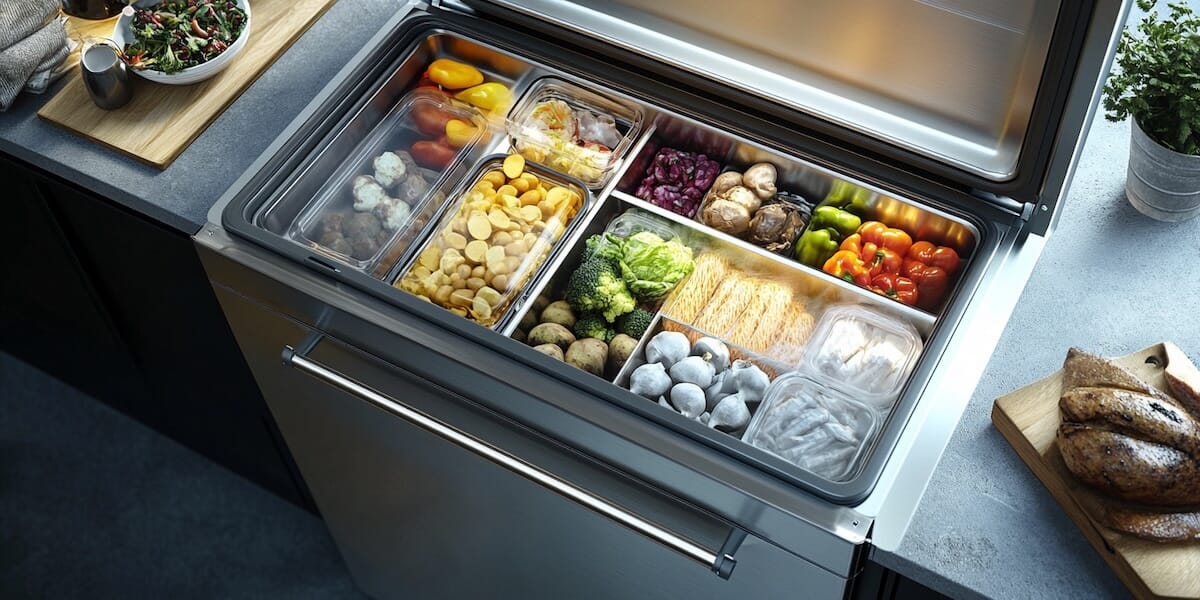
A commercial chest freezer is designed for professional use in kitchens, catering, and foodservice environments. It typically features stainless steel construction, higher capacity, and more robust components than a domestic freezer. Unlike upright freezers, chest freezers open from the top, which reduces cold air loss when accessed.What Temperature Should My Commercial Chest Freezer Be Set At?
For safe storage, set your commercial chest freezer to 0°F (-18°C) or below to prevent bacterial growth and preserve food quality. Use a calibrated thermometer to check temperatures daily in a professional setting.How Long Can Food Stay Frozen During a Power Outage?
A well-insulated chest freezer that is full can keep food frozen for up to 48 hours if the lid remains closed. Half-filled freezers typically maintain safe temperatures for around 24 hours.How Often Should I Defrost a Commercial Chest Freezer?
Manual-defrost freezers should be defrosted every 6–12 months or when frost exceeds 1 cm thick. Always drain water fully and dry before restocking. Frost-free models require less maintenance but should still be checked periodically.Can I Keep a Commercial Chest Freezer in a Garage or Outside?
Only use a “garage-ready” model if storing in unheated spaces. Extreme cold or heat can affect compressor performance, so avoid placing non-garage models outdoors in winter.How Do I Clean and Maintain My Commercial Chest Freezer?
Regular cleaning and maintenance keep your freezer running efficiently and extend its lifespan.- Turn off and empty the freezer before cleaning
- Defrost completely and drain any water
- Wipe the interior with mild detergent and warm water
- Vacuum condenser coils regularly for optimal airflow
- Inspect door seals and replace if damaged
What Are Common Chest Freezer Problems I Should Watch For?
Being aware of common issues helps prevent breakdowns and ensures your freezer operates efficiently.- Temperature fluctuations due to thermostat or airflow issues
- Excessive frost from damaged door seals
- Strange or loud noises from compressor or coolant leaks
- Constant running caused by blocked vents or poor sealing
What Are the Advantages of a Chest Freezer over an Upright Model?
Chest freezers offer several benefits for commercial kitchens, particularly when it comes to energy efficiency and storage capacity.- Greater energy efficiency and lower running costs per litre of storage
- Large, open storage space for bulk or irregular items
- Less cold air loss when opened, meaning better temperature retention